By the Lee Brothers and childhood best friend Jeff Kim at Pixlcat Coffee & Butter Mochi — the first butter mochi café in the United States, baking seven flavors fresh every morning in San Francisco and Boston.
If you’ve heard of mochi donuts, mochi ice cream, or mochi muffins and you’re wondering whether butter mochi is the same thing — it’s not. They share a word in their name and some overlapping ingredients, but they are fundamentally different products with different origins, different textures, different techniques, and different eating experiences.
We get this question constantly. Someone walks into Pixlcat for the first time, sees “butter mochi” on the menu, and asks: “Is this like a mochi donut?” Or: “Is this like mochi ice cream but warm?” The answer to both is no — but the confusion is understandable, because “mochi” has become a catch-all term for anything chewy and made with rice flour. That’s a bit like calling every bread product a croissant because they all use wheat flour.
We’re the Lee brothers — Dennis, David, and Daniel — and our childhood best friend Jeff Kim. We spent nearly a decade running Namu Gaji in San Francisco before building Pixlcat Coffee around butter mochi and specialty coffee. We bake seven flavors of butter mochi every morning across our cafés in San Francisco and Boston. This is the guide we wish existed when we started explaining the difference to customers three years ago. If you’re new to it, read our complete guide to butter mochi → /butter-mochi/
The Short Answer
Butter mochi is baked. Mochi donuts are fried. Mochi ice cream is frozen. Mochi muffins are baked in a muffin tin. They all use some form of rice flour or tapioca starch to get a chewy texture, but that’s where the similarities end. The technique, the ingredients, the origin stories, the textures, and the way you eat them are all different.
Think of it this way: a pancake, a baguette, and a birthday cake all use wheat flour. Nobody would confuse them. The same logic applies here.
What Is Butter Mochi?
Butter mochi is a baked Hawaiian dessert made from mochiko (glutinous rice flour), butter, coconut milk, sugar, and eggs. You mix everything together, pour it into a pan, and bake it at 350°F for about an hour. What comes out is dense, chewy, sweet, and rich — with crispy golden edges and a soft, almost custard-like center.
It’s not a cake. It’s not a brownie. It’s not a cookie. It doesn’t fit neatly into any existing mainland bakery category. The texture is somewhere between a brownie’s density and a gummy bear’s chew, with caramelized edges that have a light crunch before giving way to that signature pull. There are no crumbs. No dryness. Just a clean, satisfying bite.
Butter mochi has been a staple of Hawaiian home cooking for generations. It traces its roots to the blending of Japanese mochi-making techniques, Filipino bibingka (a coconut rice cake), and Portuguese butter-and-egg baking traditions that converged in Hawaii during the plantation era. Every family in Hawaii has their version. At Pixlcat, we bake it in a sheet pan and cut it into squares — Classic, Chocolate, Matcha, Ube White Chocolate, Black Sesame, S’more, and Breakfast (a savory version).
Butter mochi is naturally gluten-free. Mochiko is made from glutinous rice, and despite the confusing name, “glutinous” refers to the sticky texture — not the protein gluten. There is zero gluten in mochiko. No substitutions needed. No compromises. It’s been gluten-free since the recipe was first created.
What Are Mochi Donuts?
Mochi donuts are fried ring-shaped pastries made with glutinous rice flour or tapioca starch (or a blend of both). They originated in Japan as pon de ring — a chewy donut popularized by the chain Mister Donut in the early 2000s. The pon de ring uses tapioca starch to create a distinctive bouncy, chewy texture that’s lighter and airier than a traditional wheat-flour donut.
Mochi donuts became a phenomenon in the US starting around 2019-2020, driven by social media and the visual appeal of their segmented ring shape — each donut looks like a ring of connected balls. Chains like Mochinut have 148+ locations. You can find them in most major cities. They come in dozens of flavors, typically with colorful glazes — matcha, ube, strawberry, Oreo, taro, biscoff.
The texture of a mochi donut depends heavily on the flour used. Tapioca starch-based donuts (like the original pon de ring) are lighter, fluffier, and airier — closer to a regular donut but with a distinctive bounce. Mochiko-based donuts are denser and chewier — closer to butter mochi in texture but with the fried exterior of a donut.
What Is Mochi Ice Cream?
Mochi ice cream is a frozen dessert: a ball of ice cream wrapped in a thin shell of pounded glutinous rice (mochi). The mochi layer is soft, slightly chewy, and stretchy — it acts as an edible wrapper rather than a standalone flavor component.
Mochi ice cream was popularized in the US by the brand My/Mo Mochi in the 1990s, though the concept of wrapping fillings in mochi has existed in Japan for centuries (daifuku is the traditional form, typically filled with sweet red bean paste). Today you can find mochi ice cream at most grocery stores in flavors like green tea, mango, strawberry, and chocolate.
The key difference: mochi ice cream uses the mochi as a thin outer layer. You’re eating ice cream with a mochi texture around it. Butter mochi IS the mochi — the entire thing is mochi, baked and served as a standalone dessert. There’s no filling, no wrapper, no ice cream. It’s all chewy, all the way through.
What Is a Mochi Muffin?
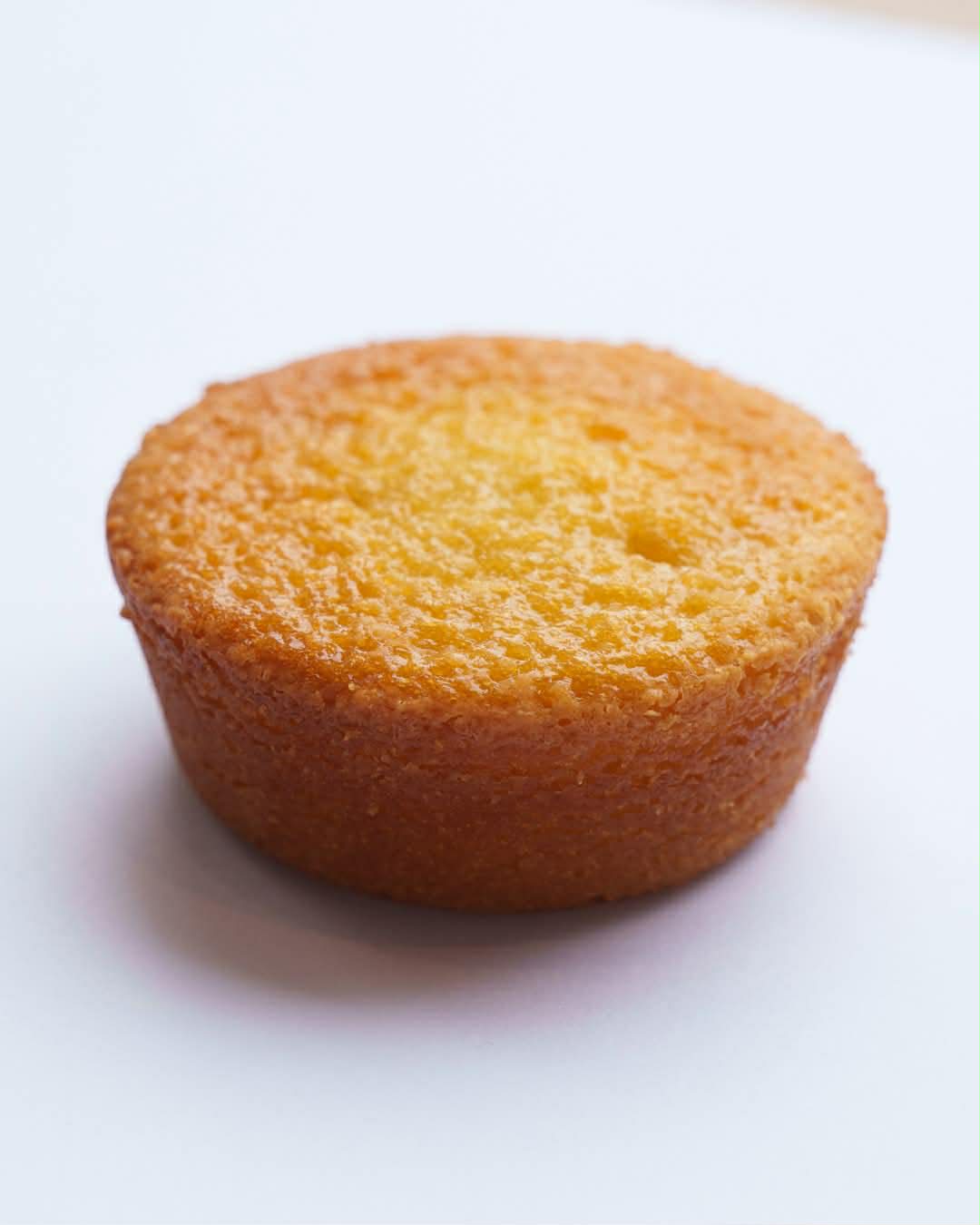
A mochi muffin is essentially butter mochi batter baked in a muffin tin instead of a sheet pan.
The concept was popularized by Third Culture Bakery in Berkeley, California, which trademarked the term “Mochi Muffin” in 2018. The trademark sparked controversy because many Hawaiian and Japanese American families had already been baking butter mochi in muffin tins for decades.
The ingredients are nearly identical to traditional butter mochi:
- mochiko (glutinous rice flour)
- butter
- coconut milk
- sugar
- eggs
The difference is the baking format.
When butter mochi batter is baked in a muffin tin, each portion develops more crispy edges because a larger percentage of the batter is exposed to oven heat. This creates a higher ratio of crispy exterior to chewy interior.
When baked in a sheet pan, butter mochi forms a larger slab that is cut into squares. The interior pieces have the deepest, densest chew because they’re surrounded by more batter and less exposed to direct heat. The perimeter pieces have crispy edges on two or three sides. At Pixlcat, we cut our sheet pan butter mochi into squares — giving each piece a balance of crispy edge and soft, chewy center.
How They Compare
Butter mochi’s dense chew and room-temperature serving create a texture and temperature contrast with hot coffee that extends the eating experience. You bite, you chew, you sip, you pause — there’s a rhythm that makes both the mochi and the coffee more interesting. Mochi donuts are lighter and sweeter, more like a traditional pastry-and-coffee combination. Mochi ice cream doesn’t pair with coffee at all — the frozen temperature clashes rather than complements. We built an entire café around the butter mochi and coffee pairing because the combination genuinely works on a flavor science level that other mochi products can’t replicate.
Although butter mochi, mochi muffins, and mochi ice cream all use glutinous rice flour, they are very different desserts.
Comparison Table
| Feature | Butter Mochi | Mochi Donut | Mochi Ice Cream | Mochi Muffin |
|---|---|---|---|---|
| Preparation | Baked in a sheet pan | Fried | Frozen ice cream wrapped in mochi | Baked in a muffin tin |
| Primary flour | Mochiko (glutinous rice flour) | Tapioca starch or mochiko blend | Glutinous rice (pounded) | Mochiko (glutinous rice flour) |
| Texture | Dense and chewy throughout | Bouncy, airy, lighter chew | Soft mochi exterior, creamy frozen center | Chewy with crispy all-around edges |
| Edges | Crispy perimeter, soft interior | Crispy fried exterior | No crisp edges | Crispy all around |
| Serving temperature | Room temperature | Room temperature or warm | Frozen | Room temperature |
| Origin | Hawaii (plantation era) | Japan (pon de ring) | Japan (daifuku tradition) | Modern bakery adaptation of butter mochi |
| Gluten-free | Yes — naturally | Usually, but varies by recipe | Usually | Yes — naturally |
| Key fat | Butter + coconut milk | Frying oil | Ice cream fat | Butter + coconut milk |
Why the Confusion Exists
The word “mochi” has exploded in mainstream American food culture over the past five years. Mochi donuts went from a niche Hawaiian-Japanese product to a 148-location chain (Mochinut) in a few years. Mochi ice cream is in every Trader Joe’s freezer aisle. Trader Joe’s even released a butter mochi box mix. The word “mochi” now signals “chewy, rice-based, probably gluten-free, definitely Instagram-worthy” to most American consumers.
That’s good for butter mochi in the long run — rising awareness of mochi as a concept brings curious customers to our counter. But it also creates confusion, because people assume all mochi products are variations of the same thing. They’re not. Butter mochi is as different from a mochi donut as a brownie is from a fried dough — they share a base ingredient but the technique, texture, and experience are worlds apart.
Which One Should You Try?
If you’ve had mochi donuts and liked them, you will almost certainly love butter mochi. The chew is deeper and more satisfying. The coconut and butter flavors are richer. The gluten-free status is guaranteed rather than variable. And the pairing with coffee is in a different league.
If you’ve had mochi ice cream and thought “I wish this mochi part were the whole thing” — that’s butter mochi. All the chew, none of the freeze, with buttery richness and caramelized edges that ice cream wrappers can’t deliver.
If you’ve never had any form of mochi and you’re curious — start with butter mochi. It’s the most approachable entry point: familiar sweetness, unfamiliar texture, no utensils required, pairs perfectly with the coffee or matcha you were going to order anyway.
At Pixlcat, we recommend the Classic butter mochi with an espresso for your first experience. It’s the clearest expression of what butter mochi is and why it works alongside coffee. From there, try the Ube White Chocolate with a vanilla oat latte — it’s our bestseller for a reason.
Where to Find Pixlcat Butter Mochi
San Francisco — Clement Street (Inner Richmond) 519 Clement Street, San Francisco, CA 94118 Mon–Fri 7:00 AM – 4:00 PM, Sat–Sun 7:00 AM – 5:00 PM Four Barrel specialty coffee. Near Golden Gate Park.
Boston — Charlestown 32 Cambridge Street, Charlestown, MA 02129 (steps from Sullivan Station) Mon–Fri 8:00 AM – 3:00 PM, Sat–Sun 8:00 AM – 3:30 PM George Howell specialty coffee.
San Francisco — Ferry Building Saturday Market Every Saturday at the Ferry Building Farmers Market.
Seven flavors at our cafés. Naturally gluten-free. Gift boxes available in-store, with catering for corporate events and private parties. Now shipping nationwide — order online at pixlcatbuttermochi.com. Ships UPS ground from Boston, Mon–Wed. BYO 6-piece boxes start at $39.
Follow us on Instagram at @pixlcatcoffee and @pxlbuttermochi.
Leave a Reply