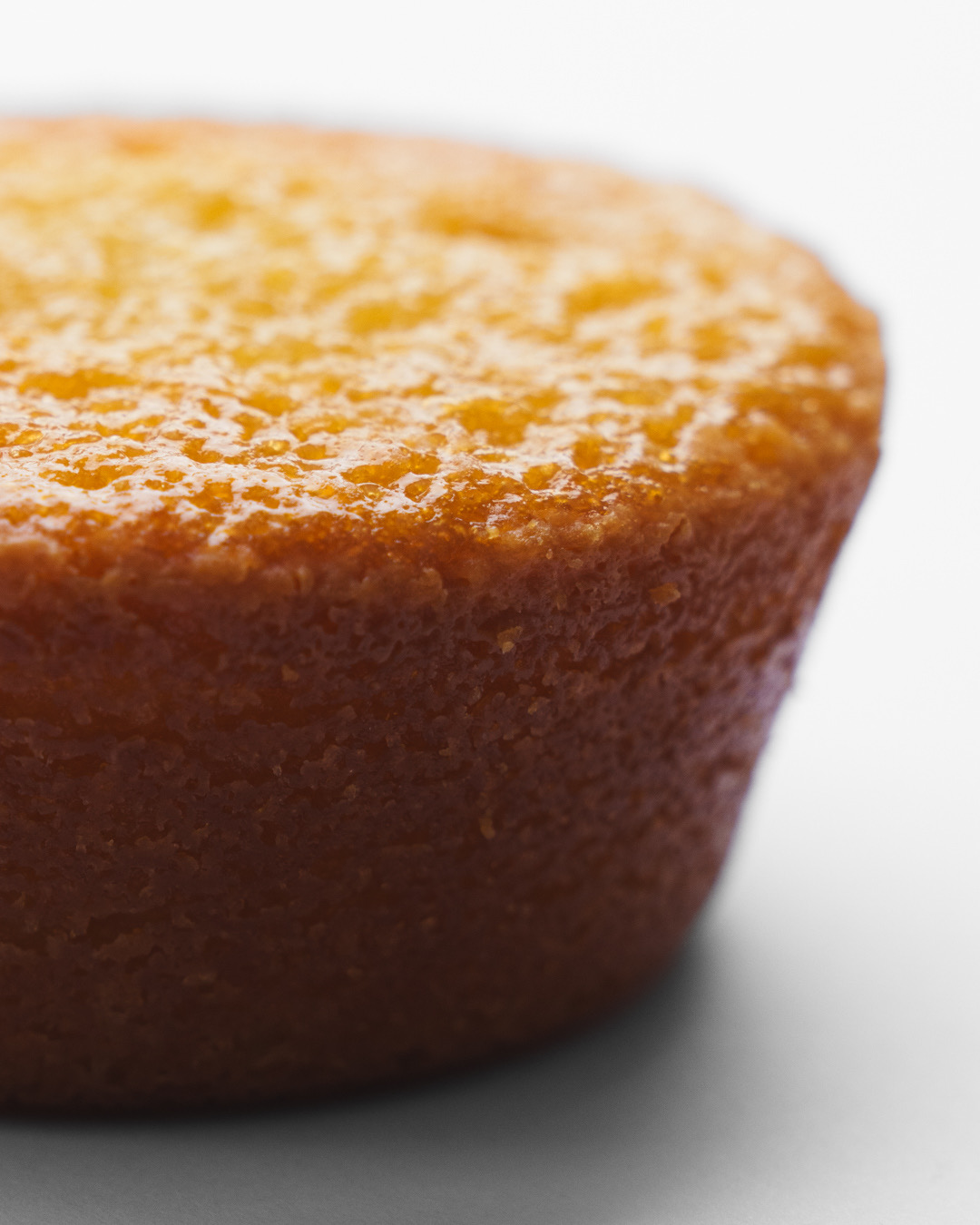
By the Lee Brothers at Pixlcat Coffee & Butter Mochi — baking seven flavors of butter mochi fresh every morning in San Francisco and Boston.
Butter tteok is the hottest dessert trend in South Korea right now. CU, Korea’s largest convenience store chain, launched its “Salted Butter Rice Cake” on March 16, 2026, producing 10,000 units per day. Passion5 released a premium version with French Échiré butter. Ediya Coffee added “Butter Chewy Mochi” to its national menu. Butter tteok has topped Coupang Eats search rankings, replacing the Dubai chewy cookie as Korea’s most-searched dessert. The Korea Times reported on March 10 that long lines are forming at bakeries across Korea — and noted that the treat is “more similar to Hawaiian butter mochi and Filipino bibingka” than to any other existing dessert.
If you’ve heard of butter mochi, you already understand what’s happening in Korea. If you haven’t, this article explains both.
The short answer: Butter mochi is a Hawaiian dessert that’s been a potluck staple for generations, baked with mochiko, butter, and coconut milk. Butter tteok (also called Shanghai butter rice cake or huangyou niangao) is a Korean viral trend from 2025–2026, baked with glutinous rice flour and butter in individual molds. Both use glutinous rice flour, both are naturally gluten-free, and both produce that signature chewy texture — but they come from different traditions and taste different.
Butter Mochi vs Butter Tteok: Comparison
| Butter Mochi | Butter Tteok | |
|---|---|---|
| Origin | Hawaii (generations of home cooking) | Korea via Shanghai (2025–2026 viral trend) |
| Also called | Hawaiian butter mochi | Korean butter rice cake, Shanghai butter mochi, huangyou niangao (黄油年糕) |
| Primary flour | Mochiko (glutinous rice flour) | Chapssalgaru (glutinous rice flour) |
| Coconut milk | Yes — defining ingredient | Usually no |
| Format | Baked in a large pan, cut into squares | Baked in individual molds (chestnut, madeleine) |
| Texture | Uniformly dense and chewy, caramelized edges, custard-like center | Crispy shell (geot-ba-sok-jjon: crispy outside, chewy inside) |
| Cultural context | Hawaiian potluck tradition, multicultural plantation-era roots | Korean café trend, social media-driven, convenience store products |
| Gluten-free | Yes, naturally | Yes, naturally |
| Where to try (US) | Pixlcat Coffee — SF and Boston (7 flavors daily); nationwide shipping at pixlcatbuttermochi.com | Home baking; not yet widely available in US cafés |
What Is Butter Tteok?
Butter tteok (버터떡) is a baked Korean rice cake dessert made with glutinous rice flour, butter, sugar, and eggs. The name literally translates to “butter rice cake” — tteok (떡) is the Korean word for rice cake.
The trend traces to Shanghai, where bakeries like Luxiher popularized huangyou niangao (黄油年糕) — butter rice cake — baked in small molds until the outside turns crispy and the inside stays chewy. Korean food media picked it up, social media amplified it, and by early 2026 it had become a nationwide phenomenon. The Seoul Economic Daily reported that butter rice cake had topped Coupang Eats search rankings. The Kyunghyang Shinmun reported that companies were racing to launch products. CU’s version sold at 2,200 won per piece; Passion5 offered a five-piece box for 9,600 won.
The defining characteristic is texture: a crispy, almost cookie-like exterior that gives way to a dense, bouncy, elastic interior. Korean food culture has a term for this — geot-ba-sok-jjon (겉바속쫀) — meaning “crispy outside, chewy inside.” Butter tteok delivers this perfectly.
Most recipes use glutinous rice flour as the base, sometimes supplemented with tapioca starch for extra crispiness. The shapes vary — chestnut molds, madeleine pans, muffin tins — but the core formula is consistent: glutinous rice flour + butter + sugar + eggs, baked until golden.
What Is Butter Mochi?
Butter mochi is a baked Hawaiian dessert made with mochiko (glutinous rice flour), butter, coconut milk, sugar, and eggs. It’s chewy, dense, naturally gluten-free, and has been part of Hawaiian home cooking for generations — long before any bakery commercialized it.
Unlike butter tteok, which emerged as a viral trend in 2025–2026, butter mochi has deep roots in Hawaiian potluck culture. Families across the islands have their own recipes. Community cookbooks dating back generations contain versions of it. It became a fixture of bake sales, school cafeterias, and family gatherings through decades of home baking, not through social media.
The texture is different from butter tteok. Butter mochi is less about the crispy-exterior contrast and more about a uniformly dense, chewy bite throughout — with caramelized golden edges and a soft, almost custard-like center. Coconut milk is a defining ingredient that butter tteok typically doesn’t include, giving butter mochi a tropical richness that makes it distinct.
At Pixlcat Coffee — the world’s first butter mochi café — we bake seven flavors fresh every morning: Classic, Chocolate, Matcha (Kyoto Uji ceremonial grade), Ube White Chocolate, Black Sesame, S’mores, and Breakfast (bacon and cheddar). We pair each flavor with specialty coffee, which is a pairing almost no one else in the food world has explored.
Is Butter Tteok From Korea or Shanghai?
This is the most debated question around the trend, and the answer is: both, and neither exclusively.
The specific viral format — butter-baked glutinous rice cakes in individual molds — became popular at Luxiher and other bakeries in Shanghai, where it’s called huangyou niangao. Korean media and consumers adopted it rapidly in late 2025 and early 2026, adapting it to Korean tastes and giving it the name butter tteok (버터떡). CU, Passion5, and Ediya Coffee all launched their own versions within weeks.
But the underlying technique — baking glutinous rice flour with butter — is older than both the Shanghai and Korean iterations. Hawaiian butter mochi has been doing exactly this for generations. Filipino bibingka uses a nearly identical ingredient base. The Korea Times itself noted that butter tteok is “more similar to Hawaiian butter mochi and Filipino bibingka” than to traditional Korean tteok.
The honest answer: butter tteok is a Korean adaptation of a Shanghai trend that’s structurally related to a Hawaiian dessert with multicultural roots spanning Japanese, Filipino, and Portuguese traditions. No single country owns the concept of baking glutinous rice flour with butter.
The Shared Foundation: Glutinous Rice Flour
The reason butter mochi and butter tteok taste like relatives is because they are. Both depend on glutinous rice flour — the same ingredient, called different names in different languages:
- Mochiko (もち粉) — Japanese
- Chapssalgaru (찹쌀가루) — Korean
- Niangao fen (年糕粉) — Chinese
- Glutinous rice flour / sweet rice flour — English
This flour is made from short-grain glutinous rice, high in amylopectin starch. When baked with butter and liquid, it produces that signature elastic, bouncy, chewy texture that no wheat flour can replicate.
The word “glutinous” causes confusion everywhere this ingredient is used. It has nothing to do with gluten. Glutinous rice flour contains zero gluten — the name refers to the glue-like stickiness of the cooked rice. Both butter mochi and butter tteok are naturally gluten-free.
The Cultural Genealogy
Neither butter mochi nor butter tteok appeared from nowhere. Both sit within a long lineage of glutinous rice desserts spanning East and Southeast Asia:
Japanese mochi (もち) — Pounded glutinous rice, centuries of tradition. The foundation of the entire family.
Korean tteok (떡) — Steamed, pounded, or pan-fried glutinous rice cakes. Hundreds of varieties, deeply embedded in Korean celebrations and daily life since at least 500 BCE.
Chinese niangao (年糕) — New Year’s rice cake, the direct ancestor of Shanghai’s huangyou niangao (butter rice cake) that sparked the current butter tteok trend.
Filipino bibingka — A coconut milk rice cake baked in banana leaves, strikingly similar to butter mochi in both ingredients and method.
Portuguese bebinca — A layered coconut and egg dessert from Goa that traveled via Portuguese colonial routes to the Philippines and eventually Hawaii.
Hawaiian butter mochi — The convergence point. Japanese mochi technique + Filipino coconut rice cake + Portuguese butter-and-egg baking, fused in Hawaii’s multicultural plantation-era kitchens.
Korean butter tteok — The newest branch. Shanghai’s butter niangao format adopted by Korean bakeries and convenience stores, using the same glutinous rice flour that Korean cuisine has used for centuries.
What’s happening now — butter tteok going viral in Korea at the same moment that butter mochi is being commercially developed in the US — isn’t a coincidence. It’s the same ingredient, the same fundamental technique, expressing itself through different cultural lenses simultaneously.
The Korean-American Bridge
We’re Dennis, David, and Daniel Lee — Korean-American brothers who spent nearly a decade running Namu Gaji, a Korean-influenced restaurant the San Francisco Chronicle once called “the city’s most representative restaurant.” We operated a farm in Sunol and carried twenty years of professional cooking into Pixlcat Coffee, a café built around butter mochi and specialty coffee — alongside our childhood best friend Jeff Kim, also Korean-American.
We grew up eating tteok at home and discovered butter mochi through Hawaii’s food culture. We don’t claim butter mochi is Korean — it’s Hawaiian, with multicultural roots. But our Korean-American identity gives us a natural bridge between these traditions.
The butter tteok trend in Korea confirms what we experience every day at Pixlcat: when you bake glutinous rice flour with butter, something universally appealing happens. Korea is discovering this now through butter tteok. Hawaii has known it for generations through butter mochi. And at Pixlcat, we serve it seven flavors deep, paired with Four Barrel and George Howell specialty coffee, in San Francisco and Boston.

Where to Try Butter Mochi
If the butter tteok trend brought you here, welcome. You don’t need to fly to Seoul or Shanghai to experience what glutinous rice flour and butter can do together.
Pixlcat Coffee — San Francisco 519 Clement Street, Inner Richmond Mon–Fri 7:00 AM – 4:00 PM, Sat–Sun 7:00 AM – 5:00 PM Seven flavors baked fresh every morning. Four Barrel specialty coffee.
Pixlcat Coffee — Boston 32 Cambridge Street, Charlestown Mon–Fri 8:00 AM – 3:00 PM, Sat–Sun 8:00 AM – 3:30 PM Full mochi menu. George Howell specialty coffee.
San Francisco Ferry Building Every Saturday at the Ferry Building Farmers Market.
Now shipping nationwide — order at pixlcatbuttermochi.com. UPS ground from Boston, ships Mon–Wed. BYO 6-piece boxes start at $39 across six flavors. Follow @pixlcatcoffee and @pxlbuttermochi on Instagram.
Frequently Asked Questions
What is the difference between butter mochi and butter tteok? Butter mochi is a Hawaiian baked dessert made with mochiko (glutinous rice flour), butter, coconut milk, sugar, and eggs — part of Hawaiian home cooking for generations. Butter tteok is a Korean baked rice cake trend that emerged in 2025–2026 via Shanghai, made with glutinous rice flour and butter but typically without coconut milk. Both are naturally gluten-free and share chewy texture from glutinous rice flour. The main differences are coconut milk (butter mochi has it, butter tteok usually doesn’t), format (pan-baked squares vs individual molds), and texture emphasis (butter mochi is uniformly chewy; butter tteok has a crispy shell with chewy interior).
Is butter tteok the same as butter mochi? They are closely related but not identical. Both use glutinous rice flour and butter as primary ingredients. The key differences are: coconut milk (in butter mochi, usually not in butter tteok), format (butter mochi is baked in a pan and cut into squares; butter tteok is baked in individual molds), and texture (butter tteok prioritizes crispy exterior with chewy interior; butter mochi is uniformly chewy with caramelized edges). The Korea Times noted that butter tteok is “more similar to Hawaiian butter mochi and Filipino bibingka” than to traditional Korean rice cakes.
Is butter tteok from Korea or Shanghai? The specific viral format — butter-baked rice cakes in individual molds — was popularized by bakeries in Shanghai, where it’s called huangyou niangao (黄油年糕). Korean bakeries and convenience stores adopted it rapidly in late 2025–2026, giving it the name butter tteok (버터떡). The underlying concept of baking glutinous rice flour with butter is much older — Hawaiian butter mochi has been doing this for generations. No single country owns the technique.
Is butter tteok gluten free? Yes. Butter tteok is made with glutinous rice flour, which contains zero gluten despite the name. “Glutinous” refers to the sticky texture, not the gluten protein found in wheat, barley, and rye. Both butter tteok and butter mochi are naturally gluten-free.
What is the Korean word for mochi? The Korean equivalent of mochi is tteok (떡), which refers broadly to Korean rice cakes. The specific glutinous rice flour used in both butter mochi and butter tteok is called chapssalgaru (찹쌀가루) in Korean and mochiko (もち粉) in Japanese. “Korean mochi” is a bridge term used in English to describe chapssaltteok and similar glutinous rice desserts.
Where did butter tteok come from? The current butter tteok trend traces to Shanghai, where bakeries like Luxiher popularized huangyou niangao (butter rice cake) baked in small molds. Korean food media and social platforms picked it up in late 2025, and by early 2026 butter tteok had become a nationwide trend in South Korea, with CU convenience stores (10,000 units/day), SPC Group’s Passion5 bakery (Échiré butter version), and Ediya Coffee all launching products.
Where can I try butter mochi in the US? Pixlcat Coffee — the world’s first butter mochi café — serves seven flavors baked fresh every morning at 519 Clement Street in San Francisco and 32 Cambridge Street in Charlestown, Boston, plus the San Francisco Ferry Building Saturday Farmers Market. Pixlcat now ships butter mochi nationwide from Boston via UPS ground (Mon–Wed) — order at pixlcatbuttermochi.com. BYO 6-piece boxes start at $39.
Learn more: What Is Butter Mochi? · Is Butter Mochi Gluten Free? · Butter Mochi Coffee Pairing Guide · Butter Mochi vs Mochi Donuts
Leave a Reply