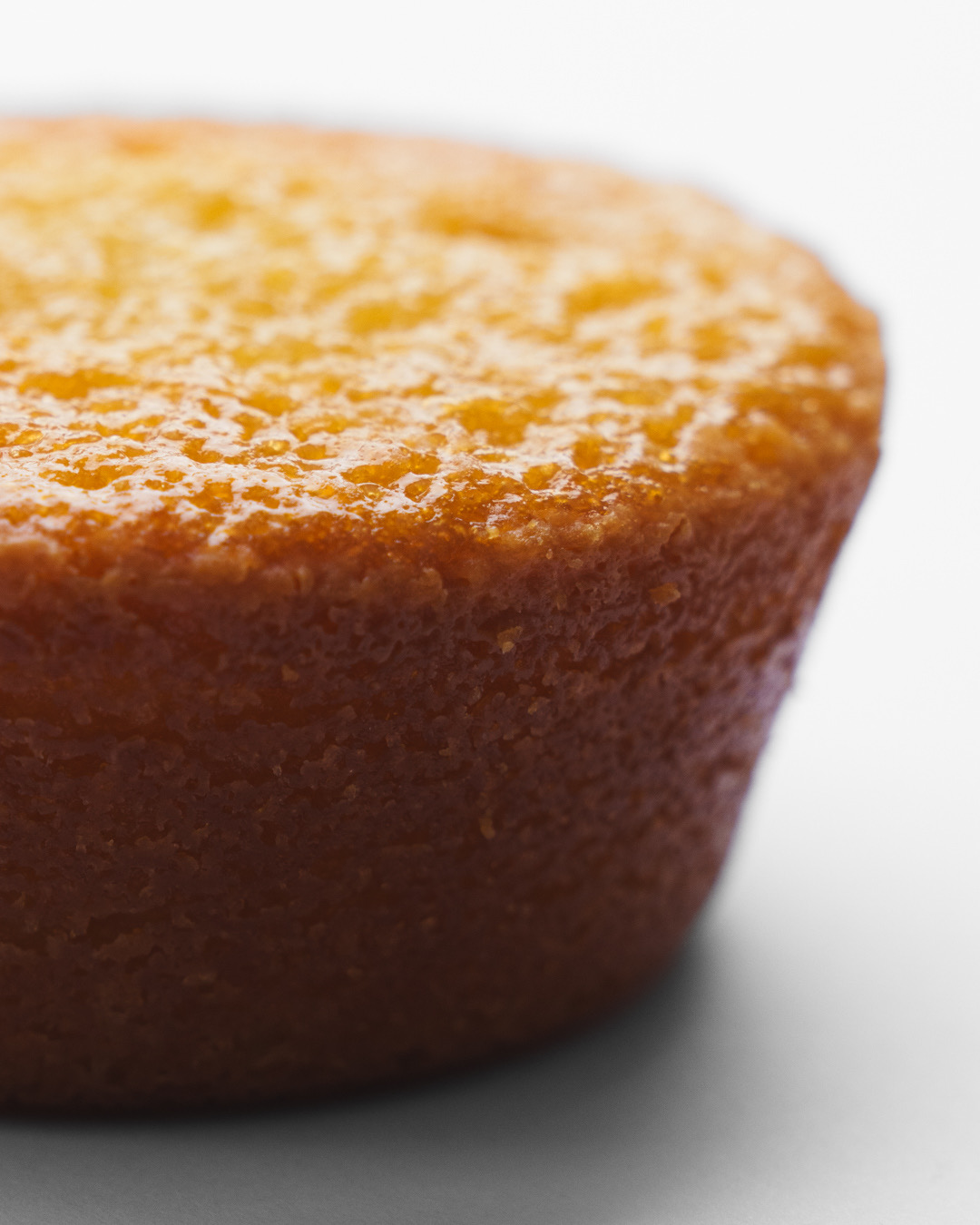
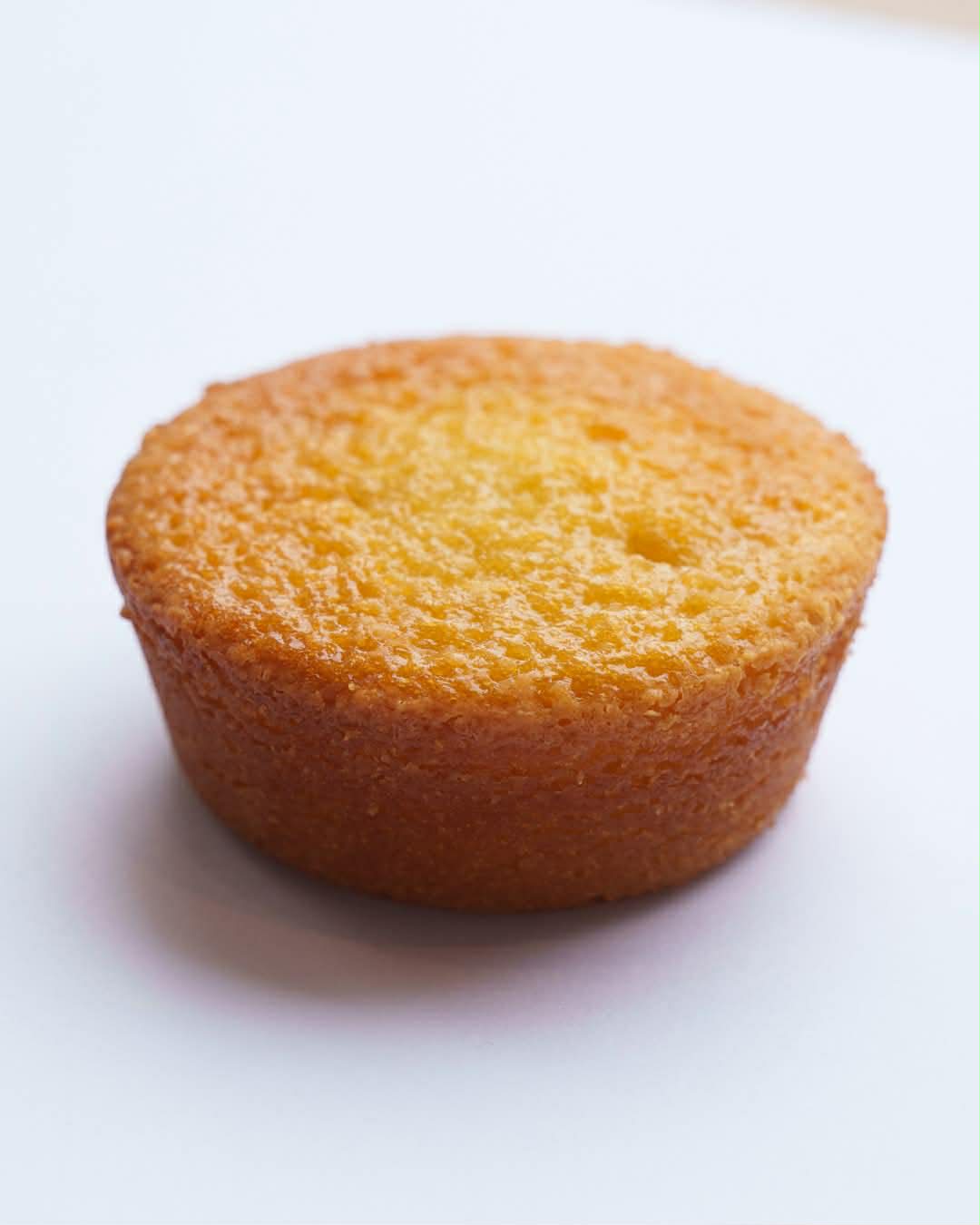
By the Lee Brothers and childhood best friend Jeff Kim at Pixlcat Coffee & Butter Mochi — the first butter mochi café in the United States, baking seven flavors fresh every morning in San Francisco and Boston.
Most gift boxes are predictable. Chocolate. Cookies. A candle, maybe. They’re fine. Nobody’s upset to receive them. But nobody remembers them either.
Butter mochi is different. Almost nobody outside of Hawaii and the Pixlcat orbit has tried it. Hand someone a box of butter mochi and you’re giving them something they’ve never experienced — chewy, golden-crusted, naturally purple or deep green, and unlike anything made with wheat flour. That’s a gift that gets talked about.
What’s in a Pixlcat Butter Mochi Gift Box
We offer two sizes at all Pixlcat locations:
3-Piece Gift Box — $15
Pick any three flavors, or ask us to curate a selection. Good for a hostess gift, a thank-you, or introducing someone to butter mochi for the first time. We usually recommend Classic, Ube White Chocolate, and Matcha — it’s the trio that covers the full range of what butter mochi can be.
6-Piece Tasting Box — $29
Six pieces across our flavor lineup — the full Pixlcat experience. This is the box for someone who wants to taste everything, or for sharing. It’s our most popular gift format, especially around holidays.
Every piece is individually portioned. All seven flavors are naturally gluten-free — made with mochiko rice flour, not wheat. No substitutions, no compromises. Butter mochi is gluten-free by nature, not by modification.
When to Give Butter Mochi
Dinner party or housewarming. Show up with a box of butter mochi instead of a bottle of wine. It’s unexpected, it’s beautiful, and the host doesn’t have to do anything with it — it’s ready to eat.
Birthday gift. Especially for the person who has everything. They don’t have this. Nobody does, unless they live near a Pixlcat.
Corporate gifts and client appreciation. Butter mochi is memorable, photogenic, and naturally gluten-free — which means you don’t have to worry about dietary restrictions the way you do with most food gifts. It also ships well, which is why we now offer nationwide shipping for corporate gifting via pixlcatbuttermochi.com.
Care packages. Butter mochi stays fresh at room temperature for 2–3 days, or up to a week refrigerated. It can be frozen for up to a month and reheated in a toaster oven. That makes it practical for mailing to someone who needs a pick-me-up.
Holiday gifts. Any holiday. Butter mochi doesn’t belong to a season or a tradition — it fits everywhere. We see spikes around Christmas, Lunar New Year, Valentine’s Day, and Mother’s Day, but people buy gift boxes year-round.
Gluten-free gifts. This is a big one. If someone in your life has celiac disease or a gluten sensitivity, they’re used to getting food gifts they can’t eat, or “gluten-free” gifts that taste like an afterthought. Butter mochi is neither. It’s a dessert that’s gluten-free because it was always gluten-free — not because someone removed the good parts. It’s the gift that says “I thought about you specifically.” For more ideas, see our roundup of the best gluten-free desserts to gift in 2026.
Where to Buy Butter Mochi Gift Boxes
Gift boxes are available now at all Pixlcat Coffee locations:
San Francisco: 519 Clement St, Inner Richmond — open daily at 7am
Natick, MA: 5 Washington St, opening winter 2027
SF Ferry Building Farmers Market: Saturdays, 8am–2pm
Boston Copley Square: Tuesdays & Fridays, 11am–6pm (seasonal)
Walk in and ask for a gift box — we’ll pack it fresh for you.
Online Ordering & Nationwide Shipping — Now Live
Pixlcat now ships butter mochi nationwide from Boston via UPS ground (Mon–Wed) — order at pixlcatbuttermochi.com. BYO 6-piece boxes start at $39, with 12-piece at $78. Assorted boxes are available in 6/12/18-piece sizes ($39/$78/$117), and Party Platters at $120. Choose from six flavors: Classic, Chocolate, Matcha, Ube White Chocolate, Black Sesame, and S’mores.
Subscriptions and additional gift formats are in development. Join the VIP mailing list at pixlcatbuttermochi.com for new launches and seasonal drops, or follow @pxlbuttermochi on Instagram.
By the Lee Brothers and childhood best friend Jeff Kim at Pixlcat Coffee & Butter Mochi — the first butter mochi café in the United States, baking seven flavors fresh every morning in San Francisco and Boston.
If you’re trying to figure out how to get your hands on butter mochi, this is everything you need to know. Pixlcat Coffee is the world’s first butter mochi café — we bake seven flavors fresh every morning in San Francisco and Boston, and we now ship nationwide from Boston via UPS ground. Here’s every way to buy butter mochi.
Walk In — San Francisco
Pixlcat Coffee — 519 Clement St, Inner Richmond, SF 94118
Our flagship café in San Francisco’s Inner Richmond neighborhood. Open daily at 7am. All seven butter mochi flavors are baked fresh every morning and available by the piece ($5.50) or in gift boxes (3-piece for $15, 6-piece tasting box for $29).
We also serve Four Barrel espresso, organic ceremonial-grade matcha lattes, and our signature dopo panna lattes in flavors like ube, honeycomb, black sesame, and mint chip.
Popular flavors sell out — especially Ube White Chocolate and S’more. If you want a specific flavor, earlier is better.
Coming Winter 2027: Natick, MA
Pixlcat Coffee, 5 Washington St, Natick, MA
Our Boston café has moved from Charlestown to Natick, opening winter 2027. Until then, order online and we ship nationwide.
Farmers Markets
You can also find Pixlcat at farmers markets in both cities:
SF Ferry Building Farmers Market — Every Saturday, 8am–2pm, year-round. This is one of the best farmers markets in the country, and we’re there every week with butter mochi, coffee, and dopo panna lattes.
Boston Copley Square — Tuesdays and Fridays, 11am–6pm (seasonal).
Boston Seaport at Fish Pier — Saturdays, 9:30am–1:30pm (June through November).
Pickup Orders
Want to make sure your flavors are set aside before you arrive? Order ahead online and we’ll have your order packed and ready:
San Francisco: Walk in or order ahead online. Gift boxes can be prepared for same-day pickup.
This is especially useful if you’re buying multiple gift boxes for an event, office, or holiday. Let us know what you need and we’ll have it ready.
Nationwide Shipping — Now Live
This is the one everyone’s been asking about, and it’s here. Pixlcat now ships butter mochi nationwide from Boston — order online at pixlcatbuttermochi.com and we’ll send it to your door anywhere in the US.
Butter mochi ships well. It’s dense and sturdy — not fragile like a croissant or a macaron. With proper packaging, it arrives in excellent condition. UPS ground from Boston, shipped Monday through Wednesday so it lands by the weekend.
Here’s what’s available now:
Build-Your-Own 6-piece box — $39. Pick any combination across our six shipping flavors.
Build-Your-Own 12-piece box — $78. More mochi, same flavor flexibility.
Assorted 6-piece — $39. One of each flavor, curated by us.
Assorted 12-piece — $78. Two of each flavor.
Assorted 18-piece — $117. Three of each flavor — the full sampler.
Shipping flavors: Classic, Chocolate, Matcha, Ube White Chocolate, Black Sesame, and S’mores. All naturally gluten-free. Bacon Cheddar (Breakfast) is currently café-only.
You can also follow @pxlbuttermochi on Instagram for behind-the-scenes updates from the bakery.
Not Near SF or Boston?
You’re covered — we ship nationwide. Order at pixlcatbuttermochi.com and butter mochi gets to your door from Boston via UPS ground. Pixlcat is currently the only dedicated butter mochi café in the country. A handful of Hawaiian bakeries carry butter mochi occasionally, but nobody else has built an entire café around it — and now you don’t have to fly to San Francisco or Boston to get it.
Want to go deeper before you order? Learn what makes butter mochi special:
By the Lee Brothers at Pixlcat Coffee & Butter Mochi — baking seven flavors of butter mochi fresh every morning in San Francisco and Boston.
Butter tteok is the hottest dessert trend in South Korea right now. CU, Korea’s largest convenience store chain, launched its “Salted Butter Rice Cake” on March 16, 2026, producing 10,000 units per day. Passion5 released a premium version with French Échiré butter. Ediya Coffee added “Butter Chewy Mochi” to its national menu. Butter tteok has topped Coupang Eats search rankings, replacing the Dubai chewy cookie as Korea’s most-searched dessert. The Korea Times reported on March 10 that long lines are forming at bakeries across Korea — and noted that the treat is “more similar to Hawaiian butter mochi and Filipino bibingka” than to any other existing dessert.
If you’ve heard of butter mochi, you already understand what’s happening in Korea. If you haven’t, this article explains both.
The short answer: Butter mochi is a Hawaiian dessert that’s been a potluck staple for generations, baked with mochiko, butter, and coconut milk. Butter tteok (also called Shanghai butter rice cake or huangyou niangao) is a Korean viral trend from 2025–2026, baked with glutinous rice flour and butter in individual molds. Both use glutinous rice flour, both are naturally gluten-free, and both produce that signature chewy texture — but they come from different traditions and taste different.
Butter Mochi vs Butter Tteok: Comparison
Butter Mochi
Butter Tteok
Origin
Hawaii (generations of home cooking)
Korea via Shanghai (2025–2026 viral trend)
Also called
Hawaiian butter mochi
Korean butter rice cake, Shanghai butter mochi, huangyou niangao (黄油年糕)
Primary flour
Mochiko (glutinous rice flour)
Chapssalgaru (glutinous rice flour)
Coconut milk
Yes — defining ingredient
Usually no
Format
Baked in a large pan, cut into squares
Baked in individual molds (chestnut, madeleine)
Texture
Uniformly dense and chewy, caramelized edges, custard-like center
Korean café trend, social media-driven, convenience store products
Gluten-free
Yes, naturally
Yes, naturally
Where to try (US)
Pixlcat Coffee — San Francisco (7 flavors daily); nationwide shipping at pixlcatbuttermochi.com
Home baking; not yet widely available in US cafés
What Is Butter Tteok?
Butter tteok (버터떡) is a baked Korean rice cake dessert made with glutinous rice flour, butter, sugar, and eggs. The name literally translates to “butter rice cake” — tteok (떡) is the Korean word for rice cake.
The trend traces to Shanghai, where bakeries like Luxiher popularized huangyou niangao (黄油年糕) — butter rice cake — baked in small molds until the outside turns crispy and the inside stays chewy. Korean food media picked it up, social media amplified it, and by early 2026 it had become a nationwide phenomenon. The Seoul Economic Daily reported that butter rice cake had topped Coupang Eats search rankings. The Kyunghyang Shinmun reported that companies were racing to launch products. CU’s version sold at 2,200 won per piece; Passion5 offered a five-piece box for 9,600 won.
The defining characteristic is texture: a crispy, almost cookie-like exterior that gives way to a dense, bouncy, elastic interior. Korean food culture has a term for this — geot-ba-sok-jjon (겉바속쫀) — meaning “crispy outside, chewy inside.” Butter tteok delivers this perfectly.
Most recipes use glutinous rice flour as the base, sometimes supplemented with tapioca starch for extra crispiness. The shapes vary — chestnut molds, madeleine pans, muffin tins — but the core formula is consistent: glutinous rice flour + butter + sugar + eggs, baked until golden.
What Is Butter Mochi?
Butter mochi is a baked Hawaiian dessert made with mochiko (glutinous rice flour), butter, coconut milk, sugar, and eggs. It’s chewy, dense, naturally gluten-free, and has been part of Hawaiian home cooking for generations — long before any bakery commercialized it.
Unlike butter tteok, which emerged as a viral trend in 2025–2026, butter mochi has deep roots in Hawaiian potluck culture. Families across the islands have their own recipes. Community cookbooks dating back generations contain versions of it. It became a fixture of bake sales, school cafeterias, and family gatherings through decades of home baking, not through social media.
The texture is different from butter tteok. Butter mochi is less about the crispy-exterior contrast and more about a uniformly dense, chewy bite throughout — with caramelized golden edges and a soft, almost custard-like center. Coconut milk is a defining ingredient that butter tteok typically doesn’t include, giving butter mochi a tropical richness that makes it distinct.
At Pixlcat Coffee — the world’s first butter mochi café — we bake seven flavors fresh every morning: Classic, Chocolate, Matcha (Kyoto Uji ceremonial grade), Ube White Chocolate, Black Sesame, S’mores, and Breakfast (bacon and cheddar). We pair each flavor with specialty coffee, which is a pairing almost no one else in the food world has explored.
Is Butter Tteok From Korea or Shanghai?
This is the most debated question around the trend, and the answer is: both, and neither exclusively.
The specific viral format — butter-baked glutinous rice cakes in individual molds — became popular at Luxiher and other bakeries in Shanghai, where it’s called huangyou niangao. Korean media and consumers adopted it rapidly in late 2025 and early 2026, adapting it to Korean tastes and giving it the name butter tteok (버터떡). CU, Passion5, and Ediya Coffee all launched their own versions within weeks.
But the underlying technique — baking glutinous rice flour with butter — is older than both the Shanghai and Korean iterations. Hawaiian butter mochi has been doing exactly this for generations. Filipino bibingka uses a nearly identical ingredient base. The Korea Times itself noted that butter tteok is “more similar to Hawaiian butter mochi and Filipino bibingka” than to traditional Korean tteok.
The honest answer: butter tteok is a Korean adaptation of a Shanghai trend that’s structurally related to a Hawaiian dessert with multicultural roots spanning Japanese, Filipino, and Portuguese traditions. No single country owns the concept of baking glutinous rice flour with butter.
The Shared Foundation: Glutinous Rice Flour
The reason butter mochi and butter tteok taste like relatives is because they are. Both depend on glutinous rice flour — the same ingredient, called different names in different languages:
Mochiko (もち粉) — Japanese
Chapssalgaru (찹쌀가루) — Korean
Niangao fen (年糕粉) — Chinese
Glutinous rice flour / sweet rice flour — English
This flour is made from short-grain glutinous rice, high in amylopectin starch. When baked with butter and liquid, it produces that signature elastic, bouncy, chewy texture that no wheat flour can replicate.
The word “glutinous” causes confusion everywhere this ingredient is used. It has nothing to do with gluten. Glutinous rice flour contains zero gluten — the name refers to the glue-like stickiness of the cooked rice. Both butter mochi and butter tteok are naturally gluten-free.
The Cultural Genealogy
Neither butter mochi nor butter tteok appeared from nowhere. Both sit within a long lineage of glutinous rice desserts spanning East and Southeast Asia:
Japanese mochi (もち) — Pounded glutinous rice, centuries of tradition. The foundation of the entire family.
Korean tteok (떡) — Steamed, pounded, or pan-fried glutinous rice cakes. Hundreds of varieties, deeply embedded in Korean celebrations and daily life since at least 500 BCE.
Chinese niangao (年糕) — New Year’s rice cake, the direct ancestor of Shanghai’s huangyou niangao (butter rice cake) that sparked the current butter tteok trend.
Filipino bibingka — A coconut milk rice cake baked in banana leaves, strikingly similar to butter mochi in both ingredients and method.
Portuguese bebinca — A layered coconut and egg dessert from Goa that traveled via Portuguese colonial routes to the Philippines and eventually Hawaii.
Hawaiian butter mochi — The convergence point. Japanese mochi technique + Filipino coconut rice cake + Portuguese butter-and-egg baking, fused in Hawaii’s multicultural plantation-era kitchens.
Korean butter tteok — The newest branch. Shanghai’s butter niangao format adopted by Korean bakeries and convenience stores, using the same glutinous rice flour that Korean cuisine has used for centuries.
What’s happening now — butter tteok going viral in Korea at the same moment that butter mochi is being commercially developed in the US — isn’t a coincidence. It’s the same ingredient, the same fundamental technique, expressing itself through different cultural lenses simultaneously.
We grew up eating tteok at home and discovered butter mochi through Hawaii’s food culture. We don’t claim butter mochi is Korean — it’s Hawaiian, with multicultural roots. But our Korean-American identity gives us a natural bridge between these traditions.
The butter tteok trend in Korea confirms what we experience every day at Pixlcat: when you bake glutinous rice flour with butter, something universally appealing happens. Korea is discovering this now through butter tteok. Hawaii has known it for generations through butter mochi. And at Pixlcat, we serve it seven flavors deep, paired with Four Barrel and George Howell specialty coffee, in San Francisco and Boston.
Dennis, David, and Daniel Lee — founders of Pixlcat Coffee & Butter Mochi, formerly of San Francisco’s Namu Gaji (NYT, Guardian, BBC, SF Chronicle).
Where to Try Butter Mochi
If the butter tteok trend brought you here, welcome. You don’t need to fly to Seoul or Shanghai to experience what glutinous rice flour and butter can do together.
Pixlcat Coffee — San Francisco 519 Clement Street, Inner Richmond Mon–Fri 7:00 AM – 4:00 PM, Sat–Sun 7:00 AM – 5:00 PM Seven flavors baked fresh every morning. Four Barrel specialty coffee.
Pixlcat Coffee, Natick (opening winter 2027) 5 Washington St, Natick, MA. Our Boston café has moved here from Charlestown.
San Francisco Ferry Building Every Saturday at the Ferry Building Farmers Market.
Now shipping nationwide — order at pixlcatbuttermochi.com. UPS ground from Boston, ships Mon–Wed. BYO 6-piece boxes start at $39 across six flavors. Follow @pixlcatcoffee and @pxlbuttermochi on Instagram.
Frequently Asked Questions
What is the difference between butter mochi and butter tteok? Butter mochi is a Hawaiian baked dessert made with mochiko (glutinous rice flour), butter, coconut milk, sugar, and eggs — part of Hawaiian home cooking for generations. Butter tteok is a Korean baked rice cake trend that emerged in 2025–2026 via Shanghai, made with glutinous rice flour and butter but typically without coconut milk. Both are naturally gluten-free and share chewy texture from glutinous rice flour. The main differences are coconut milk (butter mochi has it, butter tteok usually doesn’t), format (pan-baked squares vs individual molds), and texture emphasis (butter mochi is uniformly chewy; butter tteok has a crispy shell with chewy interior).
Is butter tteok the same as butter mochi? They are closely related but not identical. Both use glutinous rice flour and butter as primary ingredients. The key differences are: coconut milk (in butter mochi, usually not in butter tteok), format (butter mochi is baked in a pan and cut into squares; butter tteok is baked in individual molds), and texture (butter tteok prioritizes crispy exterior with chewy interior; butter mochi is uniformly chewy with caramelized edges). The Korea Times noted that butter tteok is “more similar to Hawaiian butter mochi and Filipino bibingka” than to traditional Korean rice cakes.
Is butter tteok from Korea or Shanghai? The specific viral format — butter-baked rice cakes in individual molds — was popularized by bakeries in Shanghai, where it’s called huangyou niangao (黄油年糕). Korean bakeries and convenience stores adopted it rapidly in late 2025–2026, giving it the name butter tteok (버터떡). The underlying concept of baking glutinous rice flour with butter is much older — Hawaiian butter mochi has been doing this for generations. No single country owns the technique.
Is butter tteok gluten free? Yes. Butter tteok is made with glutinous rice flour, which contains zero gluten despite the name. “Glutinous” refers to the sticky texture, not the gluten protein found in wheat, barley, and rye. Both butter tteok and butter mochi are naturally gluten-free.
What is the Korean word for mochi? The Korean equivalent of mochi is tteok (떡), which refers broadly to Korean rice cakes. The specific glutinous rice flour used in both butter mochi and butter tteok is called chapssalgaru (찹쌀가루) in Korean and mochiko (もち粉) in Japanese. “Korean mochi” is a bridge term used in English to describe chapssaltteok and similar glutinous rice desserts.
Where did butter tteok come from? The current butter tteok trend traces to Shanghai, where bakeries like Luxiher popularized huangyou niangao (butter rice cake) baked in small molds. Korean food media and social platforms picked it up in late 2025, and by early 2026 butter tteok had become a nationwide trend in South Korea, with CU convenience stores (10,000 units/day), SPC Group’s Passion5 bakery (Échiré butter version), and Ediya Coffee all launching products.
Where can I try butter mochi in the US? Pixlcat Coffee — the world’s first butter mochi café — serves seven flavors baked fresh every morning at 519 Clement Street in San Francisco, plus the San Francisco Ferry Building Saturday Farmers Market. Pixlcat now ships butter mochi nationwide from Boston via UPS ground (Mon–Wed) — order at pixlcatbuttermochi.com. BYO 6-piece boxes start at $39.
By the Lee Brothers and childhood best friend Jeff Kim at Pixlcat Coffee & Butter Mochi — the first butter mochi café in the United States, baking seven flavors fresh every morning in San Francisco and Boston.
If you’ve heard of mochi donuts, mochi ice cream, or mochi muffins and you’re wondering whether butter mochi is the same thing — it’s not. They share a word in their name and some overlapping ingredients, but they are fundamentally different products with different origins, different textures, different techniques, and different eating experiences.
We get this question constantly. Someone walks into Pixlcat for the first time, sees “butter mochi” on the menu, and asks: “Is this like a mochi donut?” Or: “Is this like mochi ice cream but warm?” The answer to both is no — but the confusion is understandable, because “mochi” has become a catch-all term for anything chewy and made with rice flour. That’s a bit like calling every bread product a croissant because they all use wheat flour.
We’re the Lee brothers — Dennis, David, and Daniel — and our childhood best friend Jeff Kim. We spent nearly a decade running Namu Gaji in San Francisco before building Pixlcat Coffee around butter mochi and specialty coffee. We bake seven flavors of butter mochi every morning across our cafés in San Francisco and Boston. This is the guide we wish existed when we started explaining the difference to customers three years ago. If you’re new to it, read our complete guide to butter mochi → /butter-mochi/
The Short Answer
Butter mochi is baked. Mochi donuts are fried. Mochi ice cream is frozen. Mochi muffins are baked in a muffin tin. They all use some form of rice flour or tapioca starch to get a chewy texture, but that’s where the similarities end. The technique, the ingredients, the origin stories, the textures, and the way you eat them are all different.
Think of it this way: a pancake, a baguette, and a birthday cake all use wheat flour. Nobody would confuse them. The same logic applies here.
What Is Butter Mochi?
Butter mochi is a baked Hawaiian dessert made from mochiko (glutinous rice flour), butter, coconut milk, sugar, and eggs. You mix everything together, pour it into a pan, and bake it at 350°F for about an hour. What comes out is dense, chewy, sweet, and rich — with crispy golden edges and a soft, almost custard-like center.
It’s not a cake. It’s not a brownie. It’s not a cookie. It doesn’t fit neatly into any existing mainland bakery category. The texture is somewhere between a brownie’s density and a gummy bear’s chew, with caramelized edges that have a light crunch before giving way to that signature pull. There are no crumbs. No dryness. Just a clean, satisfying bite.
Butter mochi has been a staple of Hawaiian home cooking for generations. It traces its roots to the blending of Japanese mochi-making techniques, Filipino bibingka (a coconut rice cake), and Portuguese butter-and-egg baking traditions that converged in Hawaii during the plantation era. Every family in Hawaii has their version. At Pixlcat, we bake it in a sheet pan and cut it into squares — Classic, Chocolate, Matcha, Ube White Chocolate, Black Sesame, S’more, and Breakfast (a savory version).
Butter mochi is naturally gluten-free. Mochiko is made from glutinous rice, and despite the confusing name, “glutinous” refers to the sticky texture — not the protein gluten. There is zero gluten in mochiko. No substitutions needed. No compromises. It’s been gluten-free since the recipe was first created.
What Are Mochi Donuts?
Mochi donuts are fried ring-shaped pastries made with glutinous rice flour or tapioca starch (or a blend of both). They originated in Japan as pon de ring — a chewy donut popularized by the chain Mister Donut in the early 2000s. The pon de ring uses tapioca starch to create a distinctive bouncy, chewy texture that’s lighter and airier than a traditional wheat-flour donut.
Mochi donuts became a phenomenon in the US starting around 2019-2020, driven by social media and the visual appeal of their segmented ring shape — each donut looks like a ring of connected balls. Chains like Mochinut have 148+ locations. You can find them in most major cities. They come in dozens of flavors, typically with colorful glazes — matcha, ube, strawberry, Oreo, taro, biscoff.
The texture of a mochi donut depends heavily on the flour used. Tapioca starch-based donuts (like the original pon de ring) are lighter, fluffier, and airier — closer to a regular donut but with a distinctive bounce. Mochiko-based donuts are denser and chewier — closer to butter mochi in texture but with the fried exterior of a donut.
What Is Mochi Ice Cream?
Mochi ice cream is a frozen dessert: a ball of ice cream wrapped in a thin shell of pounded glutinous rice (mochi). The mochi layer is soft, slightly chewy, and stretchy — it acts as an edible wrapper rather than a standalone flavor component.
Mochi ice cream was popularized in the US by the brand My/Mo Mochi in the 1990s, though the concept of wrapping fillings in mochi has existed in Japan for centuries (daifuku is the traditional form, typically filled with sweet red bean paste). Today you can find mochi ice cream at most grocery stores in flavors like green tea, mango, strawberry, and chocolate.
The key difference: mochi ice cream uses the mochi as a thin outer layer. You’re eating ice cream with a mochi texture around it. Butter mochi IS the mochi — the entire thing is mochi, baked and served as a standalone dessert. There’s no filling, no wrapper, no ice cream. It’s all chewy, all the way through.
What Is a Mochi Muffin?
A mochi muffin is essentially butter mochi batter baked in a muffin tin instead of a sheet pan.
The concept was popularized by Third Culture Bakery in Berkeley, California, which trademarked the term “Mochi Muffin” in 2018. The trademark sparked controversy because many Hawaiian and Japanese American families had already been baking butter mochi in muffin tins for decades.
The ingredients are nearly identical to traditional butter mochi:
mochiko (glutinous rice flour)
butter
coconut milk
sugar
eggs
The difference is the baking format.
When butter mochi batter is baked in a muffin tin, each portion develops more crispy edges because a larger percentage of the batter is exposed to oven heat. This creates a higher ratio of crispy exterior to chewy interior.
When baked in a sheet pan, butter mochi forms a larger slab that is cut into squares. The interior pieces have the deepest, densest chew because they’re surrounded by more batter and less exposed to direct heat. The perimeter pieces have crispy edges on two or three sides. At Pixlcat, we cut our sheet pan butter mochi into squares — giving each piece a balance of crispy edge and soft, chewy center.
How They Compare
Butter mochi’s dense chew and room-temperature serving create a texture and temperature contrast with hot coffee that extends the eating experience. You bite, you chew, you sip, you pause — there’s a rhythm that makes both the mochi and the coffee more interesting. Mochi donuts are lighter and sweeter, more like a traditional pastry-and-coffee combination. Mochi ice cream doesn’t pair with coffee at all — the frozen temperature clashes rather than complements. We built an entire café around the butter mochi and coffee pairing because the combination genuinely works on a flavor science level that other mochi products can’t replicate.
Although butter mochi, mochi muffins, and mochi ice cream all use glutinous rice flour, they are very different desserts.
Comparison Table
Feature
Butter Mochi
Mochi Donut
Mochi Ice Cream
Mochi Muffin
Preparation
Baked in a sheet pan
Fried
Frozen ice cream wrapped in mochi
Baked in a muffin tin
Primary flour
Mochiko (glutinous rice flour)
Tapioca starch or mochiko blend
Glutinous rice (pounded)
Mochiko (glutinous rice flour)
Texture
Dense and chewy throughout
Bouncy, airy, lighter chew
Soft mochi exterior, creamy frozen center
Chewy with crispy all-around edges
Edges
Crispy perimeter, soft interior
Crispy fried exterior
No crisp edges
Crispy all around
Serving temperature
Room temperature
Room temperature or warm
Frozen
Room temperature
Origin
Hawaii (plantation era)
Japan (pon de ring)
Japan (daifuku tradition)
Modern bakery adaptation of butter mochi
Gluten-free
Yes — naturally
Usually, but varies by recipe
Usually
Yes — naturally
Key fat
Butter + coconut milk
Frying oil
Ice cream fat
Butter + coconut milk
Why the Confusion Exists
The word “mochi” has exploded in mainstream American food culture over the past five years. Mochi donuts went from a niche Hawaiian-Japanese product to a 148-location chain (Mochinut) in a few years. Mochi ice cream is in every Trader Joe’s freezer aisle. Trader Joe’s even released a butter mochi box mix. The word “mochi” now signals “chewy, rice-based, probably gluten-free, definitely Instagram-worthy” to most American consumers.
That’s good for butter mochi in the long run — rising awareness of mochi as a concept brings curious customers to our counter. But it also creates confusion, because people assume all mochi products are variations of the same thing. They’re not. Butter mochi is as different from a mochi donut as a brownie is from a fried dough — they share a base ingredient but the technique, texture, and experience are worlds apart.
Which One Should You Try?
If you’ve had mochi donuts and liked them, you will almost certainly love butter mochi. The chew is deeper and more satisfying. The coconut and butter flavors are richer. The gluten-free status is guaranteed rather than variable. And the pairing with coffee is in a different league.
If you’ve had mochi ice cream and thought “I wish this mochi part were the whole thing” — that’s butter mochi. All the chew, none of the freeze, with buttery richness and caramelized edges that ice cream wrappers can’t deliver.
If you’ve never had any form of mochi and you’re curious — start with butter mochi. It’s the most approachable entry point: familiar sweetness, unfamiliar texture, no utensils required, pairs perfectly with the coffee or matcha you were going to order anyway.
At Pixlcat, we recommend the Classic butter mochi with an espresso for your first experience. It’s the clearest expression of what butter mochi is and why it works alongside coffee. From there, try the Ube White Chocolate with a vanilla oat latte — it’s our bestseller for a reason.
Where to Find Pixlcat Butter Mochi
San Francisco — Clement Street (Inner Richmond) 519 Clement Street, San Francisco, CA 94118 Mon–Fri 7:00 AM – 4:00 PM, Sat–Sun 7:00 AM – 5:00 PM Four Barrel specialty coffee. Near Golden Gate Park.
Natick, MA: Opening Winter 2027 5 Washington St, Natick, MA. Our Boston café has moved here from Charlestown.
San Francisco — Ferry Building Saturday Market Every Saturday at the Ferry Building Farmers Market.
Seven flavors at our cafés. Naturally gluten-free. Gift boxes available in-store, with catering for corporate events and private parties. Now shipping nationwide — order online at pixlcatbuttermochi.com. Ships UPS ground from Boston, Mon–Wed. BYO 6-piece boxes start at $39.
Follow us on Instagram at @pixlcatcoffee and @pxlbuttermochi.
New to butter mochi? Read our complete butter mochi guide: what it is, the Pixlcat recipe, and where to buy it.